
As AI Use Increases, High Risk of Viewing the 'Patient's Body' Merely as Data


(article published on cpbc News (가톨릭평화신문), September, 16, 2026)
In the age of Artificial Intelligence (AI), more and more people are asking AI about their symptoms first rather than visiting a hospital when they are sick. The healthcare sector has also announced a major transition to AI to resolve gaps in regional, essential, and public healthcare. But who holds the responsibility?
Fr. Andrea Ciucci, Chancellor of the Pontifical Academy for Life, stated that while “'responsibility' is one of the biggest debates in AI systems today,” he firmly asserted that “responsibility always lies with humans.” Fr. Ciucci also serves as the Secretary-General of the 'RenAIssance' Foundation, established to promote AI ethics, leading global discourse on AI ethics.
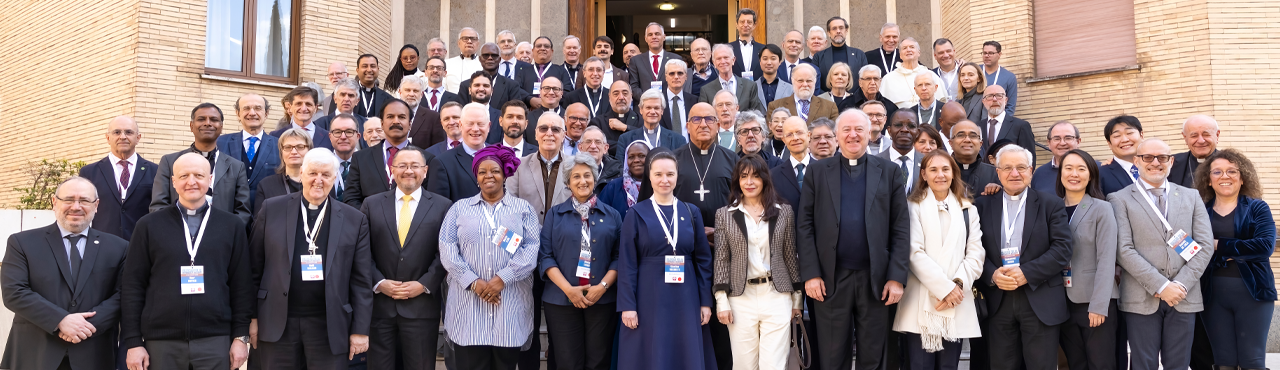
Fr. Ciucci, who served as a speaker at a special lecture hosted by Catholic University's Institute of Information and Convergence and the Graduate School of Bioethics on the 11th under the theme of "AI Ethics in the Medical Field," emphasized in an interview with cpbc News: “AI and the broader digital transformation are changing human life. As technology reshapes society itself beyond human life, we must deeply reflect on its social and anthropological consequences.” In particular, he stressed that “all medical domains must always remain under the supervision and management of medical professionals.”
Fr. Ciucci explained, “To summarize my lecture, it could be expressed as 'The Human Body in the Era of AI.' Unfortunately, in the AI era, we can observe a phenomenon where the body is objectified into data, leading to a loss of the body itself.” He pointed out that as the use of AI in healthcare expands, there is a risk of viewing the patient's physical condition and life merely as data. That is why “the Church today can play a role in restoring human encounters and fraternity.”
He especially emphasized that AI in healthcare should be used to complement, rather than replace, the relationship between medical staff and patients. He explained, “If AI is used to replace relationships rather than strengthen them, patients will ultimately end up interacting with machines. Instead, AI should be used to reduce repetitive tasks so that medical personnel can dedicate more time to their patients.”
The AI-based medical technology introduced at the lecture by Prof. Kim Dae-jin (Paul), Director of the Institute of Information and Convergence, was also focused on supporting medical staff across various areas such as medical records, image interpretation, and rehabilitation. As AI advances rapidly, setting ethical standards becomes even more crucial. Key AI ethical principles presented included human-centeredness, human control and responsibility, explicability, security and privacy protection, and social justice and the common good.
Fr. Ciucci urged, “The AI phenomenon can serve as an opportunity to ask ourselves what direction our society should move toward. Since technology originally emerged to create a more just, free, and convenient world, we need to reflect on 'justice'.” Quoting the message of Pope Leo XIV through the encyclical Rerum Novarum, he added: “We must be careful so that technology, which emerged for humanity, does not deepen discrimination and injustice due to data monopolies, nor become a tool for new forms of slavery and colonialism.”
Ultimately, humanity must remain at the center of healthcare in the AI era. Fr. Ciucci concluded, “The Catholic Church defends the common good. This is the most important role and duty the Church must fulfill in the era of AI.”