
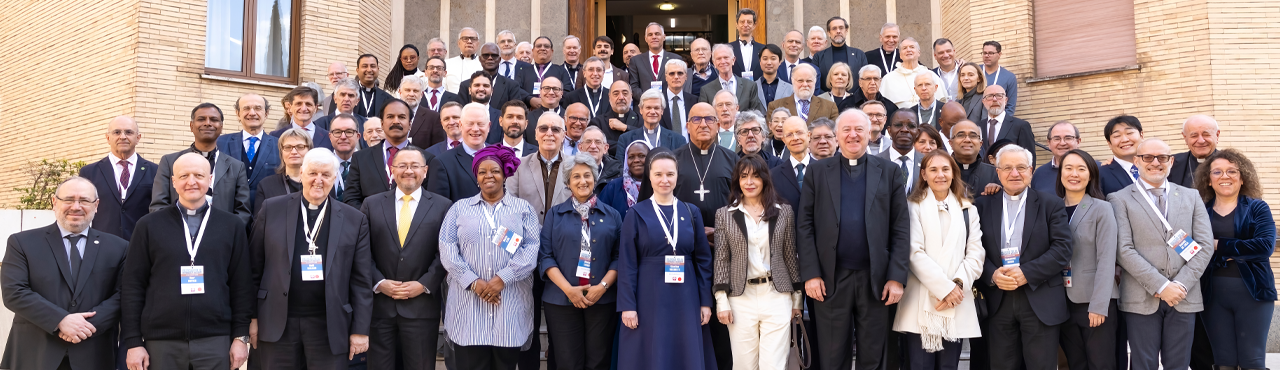
Spiritual Care as a core component of palliative care


In an international context where an increasing number of countries are considering potential end-of-life legislation, the Pontifical Academy for Life proposes to explore the topic of palliative care in greater depth. What is the purpose of this series of three webinars?
The goal of this series of webinars is to bring together recognized experts in end-of-life care. In particular, the focus will be on the fact that, at the end of life—but not only then—spiritual aspects must always be taken into account in the care of patients. When these aspects are integrated into treatment, they enhance the well-being and satisfaction of those affected and their loved ones. Furthermore, from a Christian perspective, a hopeless medical prognosis is not incompatible with the experience of healing. For healing concerns the whole person in all his/her dimensions.
Alleviating suffering and offering comfort are among the works of mercy. Those who advocate for life must also accompany it to the end. The Academy for Life also follows this principle by placing palliative care at the center of its efforts.
The first webinar was titled “Foundations of Spiritual and Religious Care as a Core Component of Whole-Person Care.” What insights emerged?
Leading experts have shared their experiences. It is detrimental to patients when the spiritual aspect of their lives, the existential side is not taken into account during treatment. Through compelling examples and shown in scientific studies, they demonstrated that spiritual care benefits patients and their well-being—indeed, it contributes to their healing. But even more than that, it also contributes to the existential life and well-being of caregivers, nurses, doctors, and everyone involved in their care.
In a society—often secularized—where people are living longer and where medical treatments allow people to continue living even with chronic illnesses that leave them frail, many are feeling the need to reflect on how and when to die. How can we help patients and families facing serious and complex situations?
The response must be provided on several levels. In cases of advanced illness, the Church, i.e. the community of all believers — if they wish to appear sincere—must commit themselves to providing the best possible care and relief of symptoms for any person. They do so around the globe in countless healthcare facilities.
In developed countries, another question arises. Many people reach an advanced age, enjoy the blessings of modern medicine, and grow weary of life. Here, a different kind of challenge arises. Human beings can only experience meaning within a sense of security that extends even beyond death. Only by cheerfully conveying the conviction that God is the source of life—who sustains us even in death—can we avert the threat of meaninglessness. This is the task of all believers.