
Quid est homo? Quis est homo? (What is human being? Who is human being?)


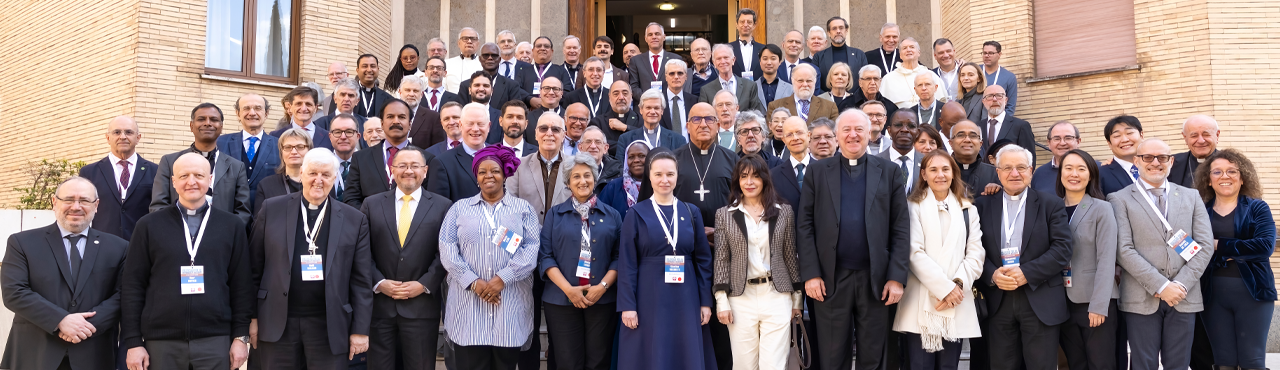
These two timeless questions, rendered in ancient language, animated the minds of scientists, researchers, clinicians, patient advocates, chaplains, philosophers, ethicists, theologians, communicators, artists, and representatives from different religious traditions – among them were Christianity, Judaism, Buddhism, and Islam – over the course of two days. On March 23-24, 2026, the speakers gathered together at Vatican City joined by a broader global audience of approximately 300 registered attendees from some 40 countries connected through the web. These questions, undeniably, resist answers by any single group alone. It was precisely for this reason an interdisciplinary approach was adopted also for the third edition of International Conference Ethics of Engineering Life (ICEEL). This academic venture was a joint collaboration of NCCR Molecular Systems Engineering, University of Basel & ETH Zurich, Switzerland, Pontificia Academia Pro Vita (PAV), and Bambino Gesù, the pediatric hospital of Vatican. The proceedings were organized under the leadership of Mons. Renzo Pegoraro, President of the PAV, and Dr. Ralf Stutzki, Head of Ethics at the NCCR. The principal thrust was to seek an equilibrium between the technical rigor of science driven by imperatives of “efficient performance” and the depth of human wisdom which draws inspiration from its fidelity to “human essence”. The manifold dimensions of the human person ˗ body, consciousness, spirit, vulnerability, creativity, communication ˗ that are appraised through distinct lenses across different fields of enquiry, can complement and enrich one another toward a more comprehensive and integrative understanding on what it truly means to be human.
The two keynote addresses examined challenges emanating from “de-extinction” projects, which claim to resurrect extinct species through gene editing techniques, and the escalating societal impact of robotics and AI in the life sciences, together drawing attention to the primacy of responsible innovation and transparent communication. Scientific data constitutes an invaluable asset in the pursuit of knowledge, yet it remains one among several ways of apprehending the totality of human. Several overarching concerns surfaced recurrently throughout the conference like the subordination of scientific vigor to the commercial interests that obfuscate the research findings; visible distortion of scholarly communication and reluctance of data sharing as funding is solicited through open media updates than engagement with peer review; transhumanistic ideals, by feeding the human aspiration without adequate human restraint, blur the precarious boundary between therapeutic and eugenic motivations in innovation; attempts to decipher profound human complex processes – among them brain function, genetic architecture with its variability across species and sexes, and reproductive technologies – which, though grounded in basic probabilities, may be presented with an unwarranted air of certainty. The inter-disciplinary deliberations of the conference were notably inclusive of spirituality, an integral dimension of human person where major religious traditions provide valuable insights for a broader scholarly debate.
These concerns collectively point to the danger of consigning the “real human” – that is, the human being understood as a unified being of body, mind, and spirit, singular with individuality, relational with shared identity, endowed with inviolable dignity and bearing a meaning that cannot succumb to reductionism – to oblivion. The prevailing scientific enthusiasm propelling fields such as AI, robotics, genetics, synthetic biology, neuro-bioengineering, regenerative medicine is invited to embrace epistemic humility – all the more urgently in the light of ongoing crises of reproducibility and credibility – and to attend with care the dual aspect of humans. This duality encoded in these two Latin interrogative pronouns was at the heart of the conference: quid – enquiring into what the human being is – and quis – asking who the human being is. Rather than standing in opposition these two modes of enquiry are complimentary, and it is in the cultivation of their harmony that a more authentic, accurate, transparent, and humane science may be formed. In this spirit, this conference served as a vital platform for fostering fruitful dialogue across a plurality of approaches and intellectual perspectives, oriented toward the forging of conceivable solutions.
A distinguishing feature of the conference, carried forward from its previous editions, was the meaningful and active involvement of young scholars, who brought fresh perspectives to the exchange of views. Particularly notable in this edition was the inclusion of artists from the world of movies and music, present not merely as sources of entertainment but as genuine bearers of inspiration where rhythms and melodies from East and West converged and dialogue with cinema director resonated human person and the innermost desire to break open the shackles and express oneself with creativity and freedom. The healthy skepticism of each discipline coupled with readiness to learn from others and eagerness to contribute to the rich mosaic of reflections that constitutes the human person holds the promise of advancing holistic well-being. This may be realized through open and unfettered dialogue, provision of avenues to integrate multiple perspectives, responsibility in research, integrity in communication, a resolute movement beyond narrow commercial interests, and the collective construction of a society committed to the common good, even amidst remarkable scientific achievements.
Fr Rockwin P. Pinto
Scientific Section
PAV, Vatican City